Surface is never an afterthought. It is where memory, material and the maker’s hand become visible.
01
Material as a starting point
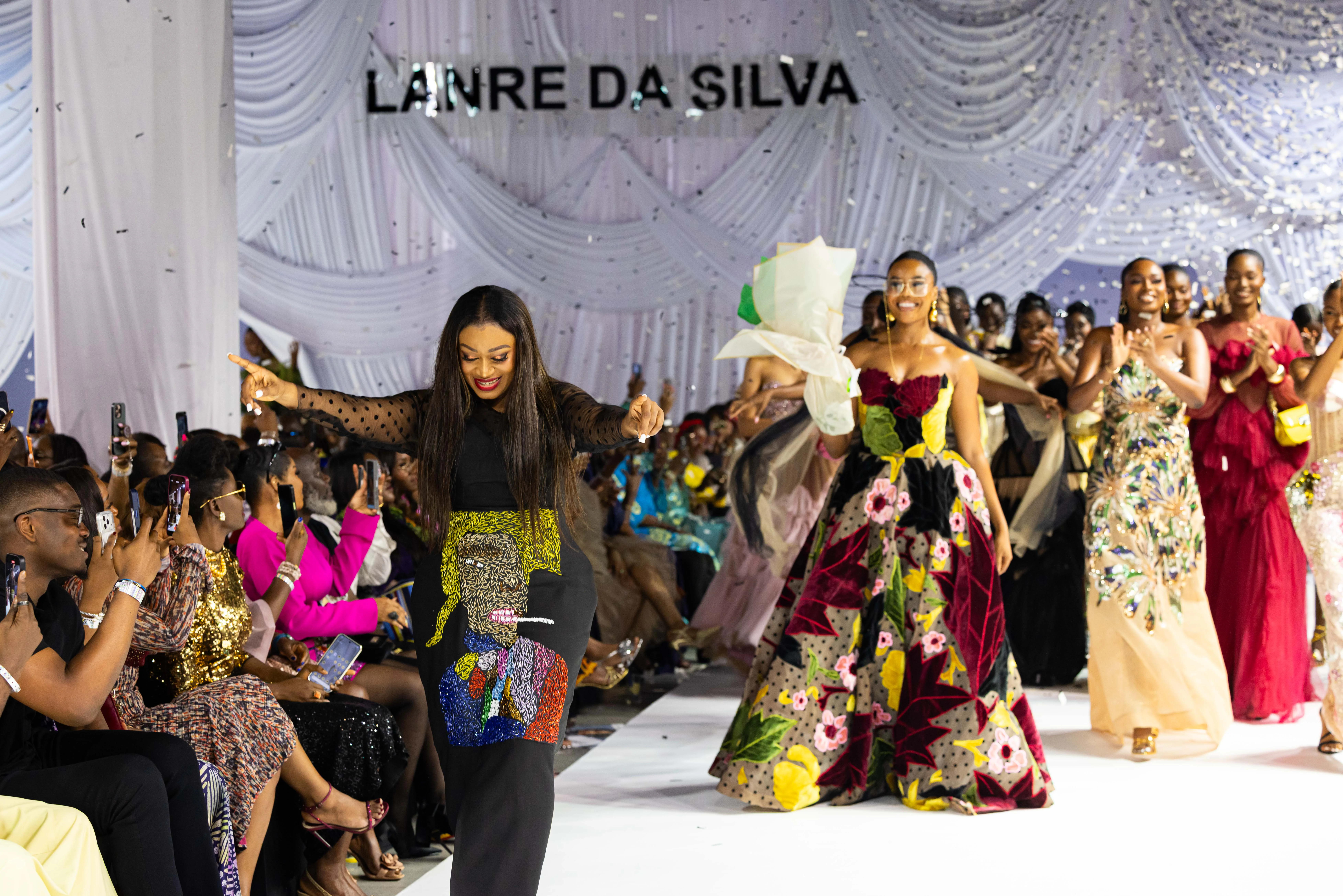
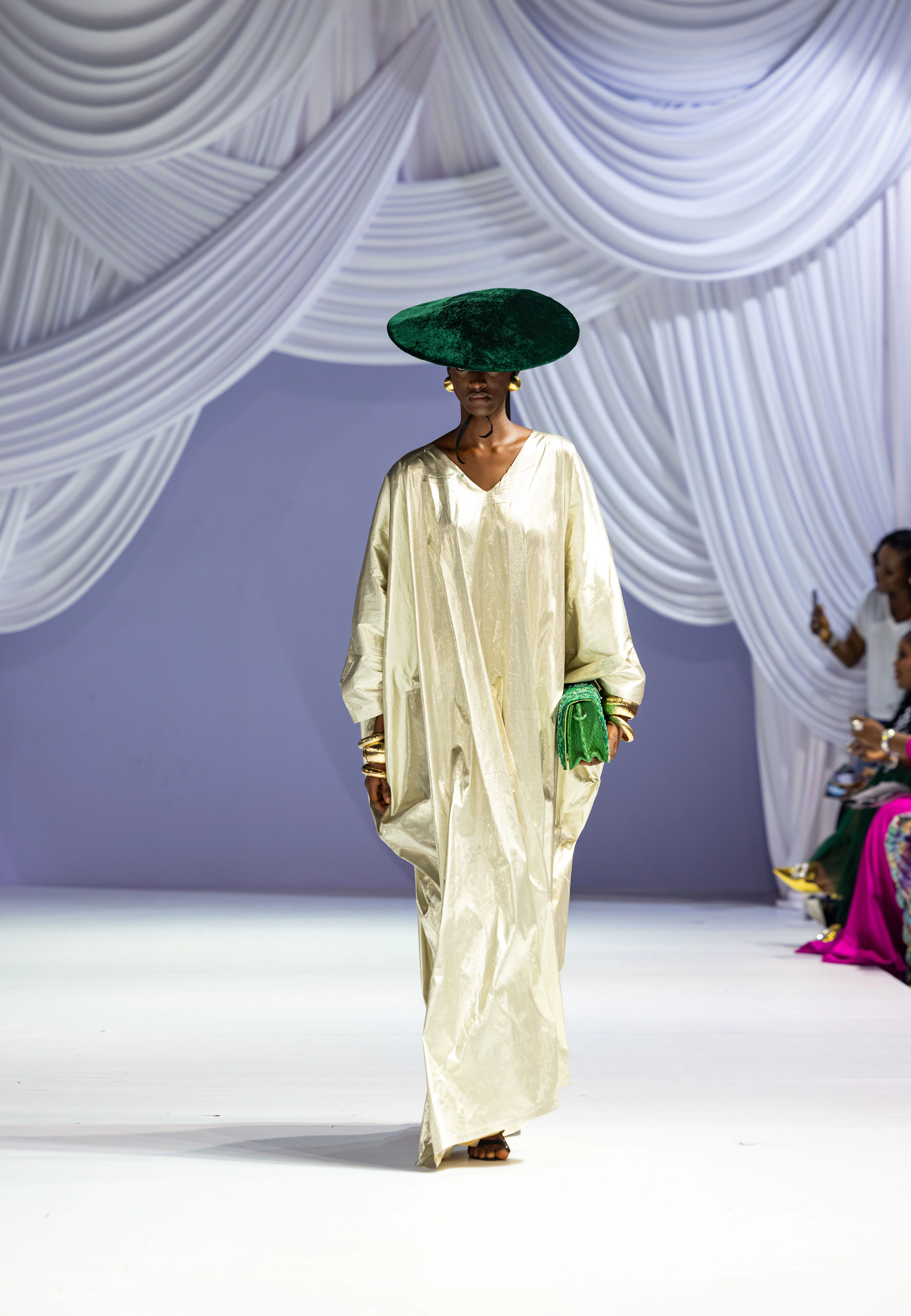
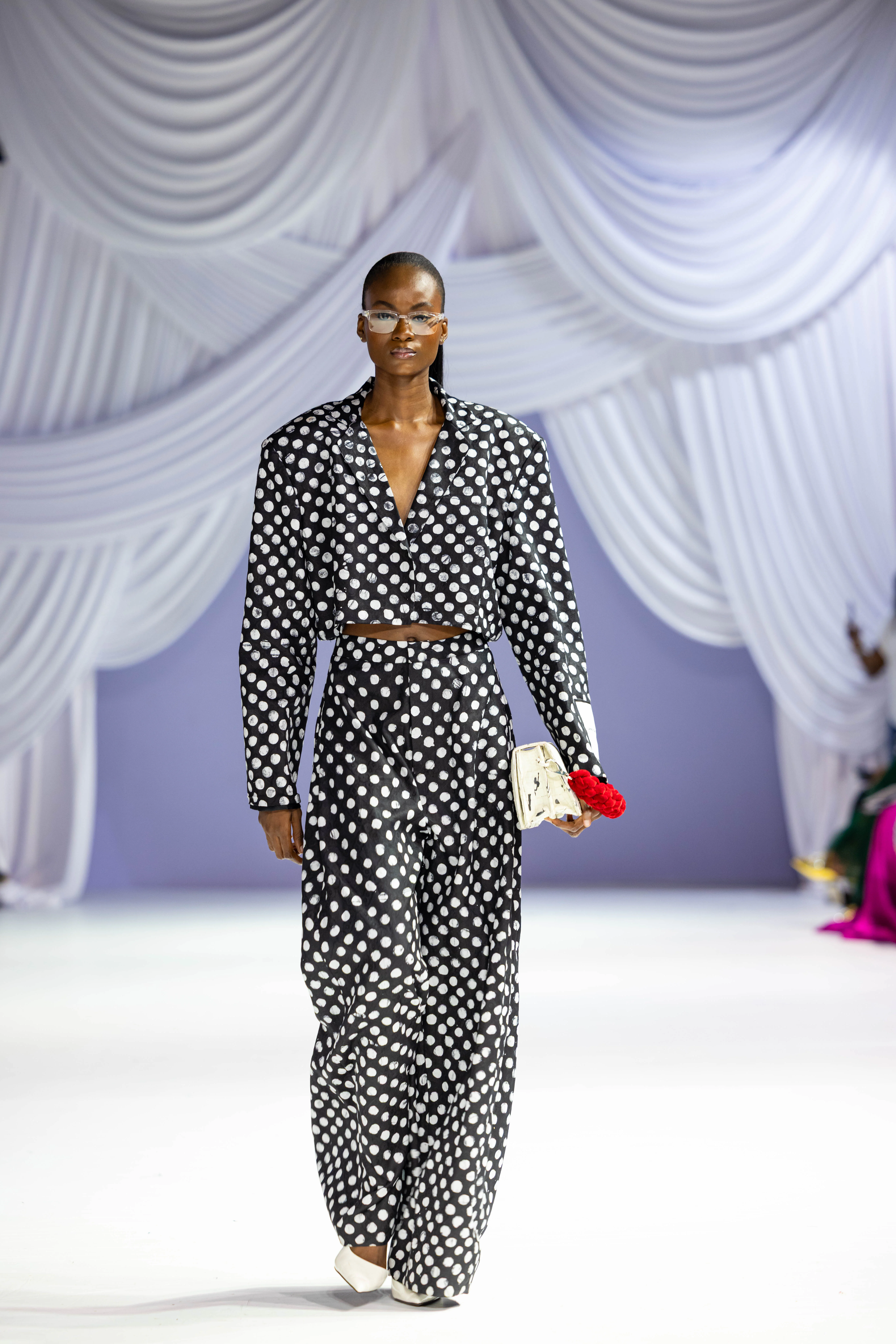
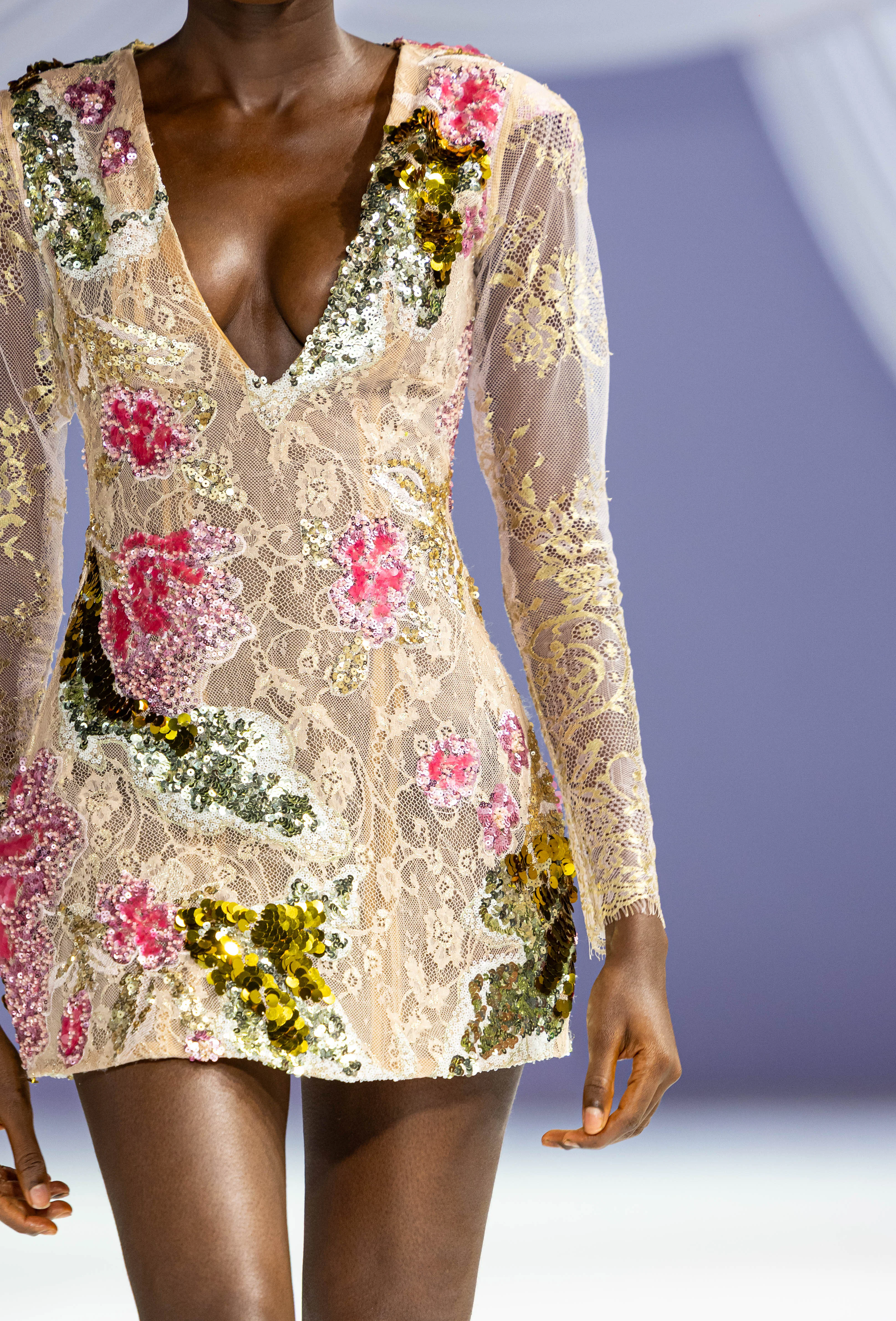
Lanre Da Silva’s work is widely associated with metallic fabrics and lace, but material is only the beginning. Shine can be softened by transparency. A traditional pattern can be enlarged, interrupted or placed against unexpected tailoring. Colour can lead the eye toward the structure of a garment rather than conceal it.
Historical references—particularly the elegance and ceremony associated with earlier eras—enter this process as fragments. A sleeve, a fitted waist or a formal line may be remembered, then loosened and remade for the present.
02
Evidence of the hand
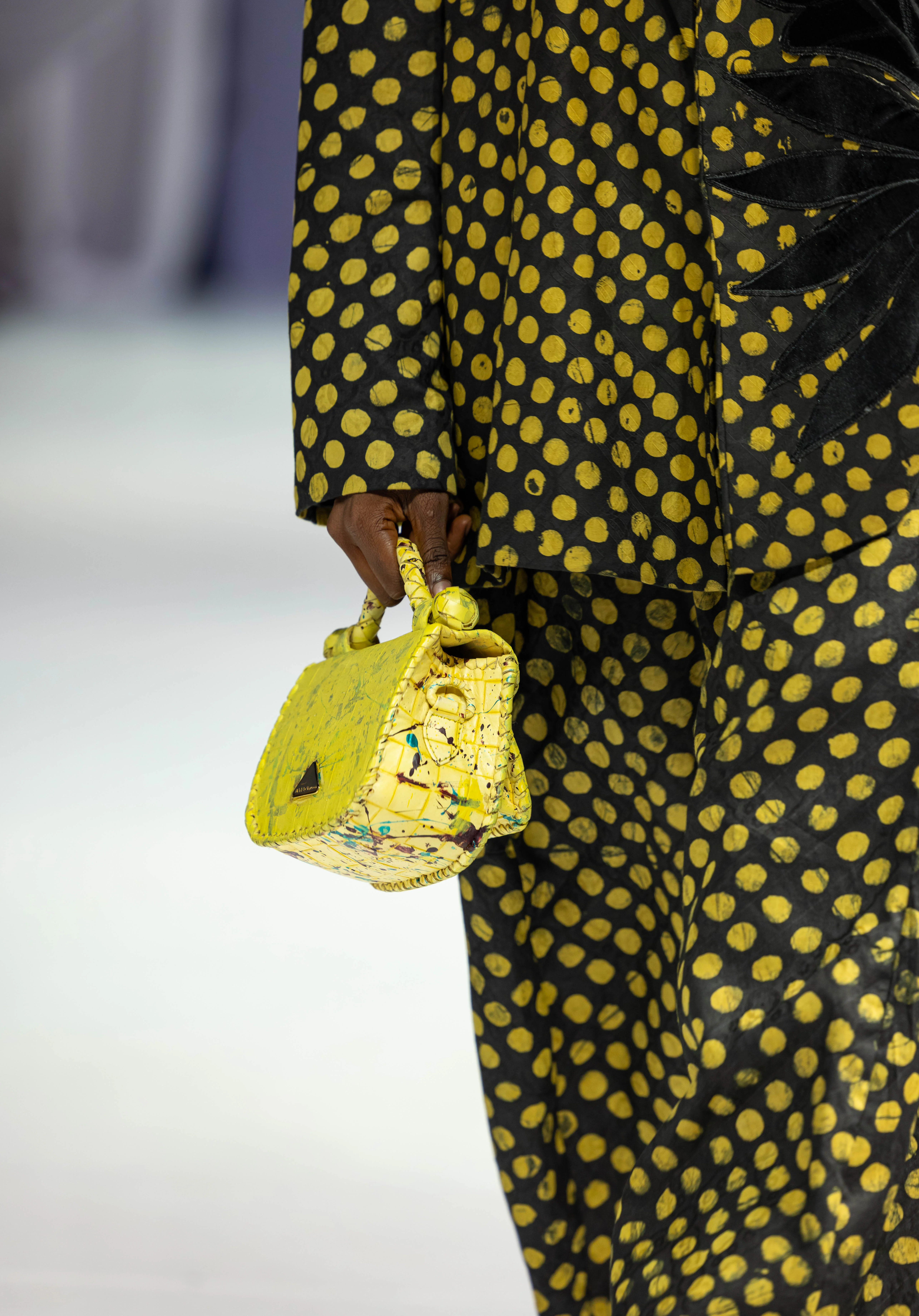
Beading, appliqué and painted gestures carry small variations that industrial repetition cannot reproduce. In 2017, the label collaborated with artist Ayoola Gbolahan on a collection incorporating hand-painted elements, extending the conversation between fashion and image-making.
In the atelier, these techniques require patience and editing. The question is not how much can be added, but where the eye should rest and how the surface should move with the body.
03
The pleasure of looking twice
A strong piece must work at two distances. Across a room, it offers silhouette and colour. Close up, it reveals a different world: the path of a thread, the edge of lace, the slight change in tone between beads.
That second encounter creates intimacy. It reminds the wearer that the garment passed through human hands and that every visible detail was the result of a decision.